Can Sea Buckthorn & Triphala Fix Skin and Gut?
Share

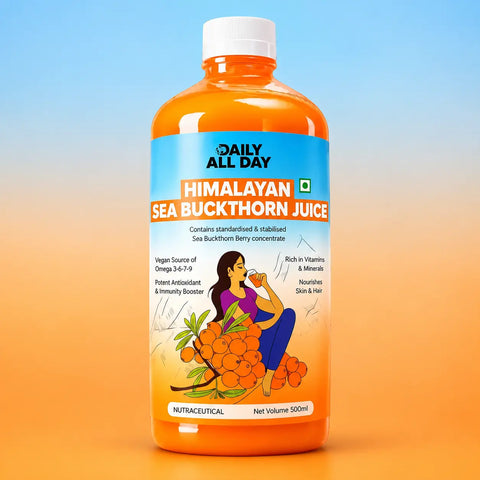
Quick Answer: Sea buckthorn omega 7 benefits for skin and gut come from palmitoleic acid, a rare fatty acid that supports skin-cell membranes and gut-lining integrity. Paired with triphala's triple-fruit fiber, the combination works on two fronts simultaneously. Sea Buckthorn Juice- Glowing Skin & Omega 7 delivers both in one daily routine.
Can Sea Buckthorn & Triphala Fix Skin and Gut?
Table of Contents
- Why These Two Herbs Are Gaining Real Attention
- The Science Behind Sea Buckthorn Omega 7 for Skin and Gut
- What Wellness Communities Are Actually Saying
- How to Build a Routine That Works
- Products That Fit This Approach
- Real Questions, Straight Answers
- Frequently Asked Questions
Why These Two Herbs Are Gaining Real Attention
Most supplements promise a lot and deliver a narrow slice. Sea buckthorn and triphala are different — not because of marketing, but because they work on genuinely distinct biological pathways that happen to overlap where a lot of people struggle: skin quality and digestive comfort.
The sea buckthorn omega 7 benefits for skin and gut have been documented in clinical settings for several years now. A 2024 randomized trial of 116 adults, published in a peer-reviewed nutrition journal, found that oral sea buckthorn oil supplementation measurably improved skin elasticity and moisture retention compared to placebo over 90 days.[1] Triphala, meanwhile, has a 2023 clinical review covering 11 trials and roughly 400 participants that confirmed statistically significant improvements in bowel regularity and gut microbiome diversity.[2]
Together, they address something most single-ingredient supplements miss entirely: the gut-skin axis. That connection is increasingly well documented. When gut lining integrity improves, inflammatory signals that show up as dull skin, breakouts, or dryness tend to quiet down. Sea buckthorn works from both ends of that axis at once.
The Science Behind Sea Buckthorn Omega 7 for Skin and Gut
Omega 7, technically palmitoleic acid, is the fatty acid that sets sea buckthorn apart from nearly every other plant source. Most plant oils give you omega 3, 6, or 9. Sea buckthorn pulp oil is one of the only plant sources that delivers a meaningful omega 7 concentration alongside all three others. That matters because palmitoleic acid is structurally similar to the fatty acids found naturally in human skin sebum, which is why it integrates so readily into skin-cell membranes.
Here is where most articles stop. Three things the top-ranking pages consistently skip:
1. What omega 7 actually does inside the gut lining (not just the skin). Palmitoleic acid supports the integrity of mucosal epithelial cells — the thin layer lining your intestines. A 2025 PMC review examining mucosal immunity noted that sea buckthorn's fatty acid and flavonoid profile supports gut barrier function and modulates immune cell activity at the mucosal surface.[3] In plain terms: omega 7 helps keep the intestinal wall from becoming overly permeable, which is a precursor to the low-grade systemic inflammation that shows up on your face.
2. Who should probably avoid sea buckthorn (and why no one says so clearly). People on blood-thinning medications should speak with a physician before adding sea buckthorn regularly. The berry's high vitamin K2 and fatty acid content can interact with anticoagulant therapy. Separately, anyone with an active gallbladder condition should start slowly — concentrated fruit oil can stimulate bile secretion, which is helpful for most people but uncomfortable for some. Pregnant individuals should consult a provider before use.
3. The dose and timing question nobody answers. The 2024 trial of 116 adults used 5 grams of sea buckthorn pulp oil daily, taken with the largest meal of the day. Fat-soluble compounds (omega 7 included) absorb significantly better alongside dietary fat, so taking your supplement with a meal that contains some fat is not optional , it's the difference between absorption and excretion. Triphala, by contrast, is traditionally taken in the evening or on an empty stomach in the morning, because its gentle laxative effect is most useful when gut motility is naturally slowing or just restarting.
Triphala's three fruits , amla, haritaki, and bibhitaki , each contribute distinct polyphenols. Amla is exceptionally high in vitamin C and ellagic acid. Haritaki contains chebulic acid, which has prebiotic properties. Bibhitaki adds gallic acid, linked in small clinical studies to reduced intestinal inflammation. The combination creates a broad-spectrum prebiotic and antioxidant effect that few single-fruit supplements can match. Learn more about how triphala supports digestion here.
For anyone curious about how sea buckthorn compares to other metabolism-focused supplements, this comparison of sea buckthorn juice vs. garcinia and ACV covers the differences clearly.
What Wellness Communities Are Actually Saying
Across Quora, Reddit wellness forums, and US-based health Facebook groups, the questions cluster around three themes: acne and skin texture, bloating and irregularity, and energy. That tracks. The sea buckthorn omega 7 benefits for skin and gut overlap directly with the complaints remote workers in particular mention most, sitting all day, disrupted eating schedules, screen fatigue showing on skin.
Wellness practitioners at community events like the Kroger Wellness Festival 2025 have flagged both ingredients as ones with legitimate, peer-reviewed backing rather than just trend momentum. That kind of institutional credibility matters for a US audience increasingly skeptical of supplement hype.
For context on how sea buckthorn functions as a daily functional beverage, this overview covers the practical side well.
How to Build a Routine That Works
The simplest version: sea buckthorn with breakfast, triphala before bed. That timing aligns with both the absorption science (fat with food) and traditional Ayurvedic guidance on triphala timing.
For remote workers especially, the gut-skin connection is worth taking seriously. Hours of sitting compresses the abdominal region, slowing transit. Add a diet that skips lunch or eats late, and you've got the conditions for the kind of sluggish digestion that eventually shows up as skin congestion. Triphala addresses the transit side; sea buckthorn addresses the lining and the systemic inflammation that follows.
More on sea buckthorn for immune and gut support is available here.
30 / 60 / 90 Day Milestones
Day 30: Most people report softer skin texture and reduced bloating within the first month. Digestion tends to become more regular within two to three weeks of consistent triphala use. These early changes are real but modest.
Day 60: Skin hydration becomes more visible. The 2024 trial of 116 adults showed measurable increases in skin moisture and thickness by week eight. Gut comfort , less post-meal heaviness, more predictable bowel timing , is typically well-established by this point.
Day 90: The full cumulative effect of omega 7 on mucosal lining integrity and skin-cell turnover shows by the three-month mark. This is also when the gut microbiome changes from triphala's prebiotic effect become more durable. Consistency matters more here than dose size.
If you are also looking at broader fatty acid support, Daily All Day Total Wellness Omega 3 6 9 rounds out the omega spectrum with ALA, linolenic acid, and oleic acid in plant-based capsules. Pairing a complete omega profile with sea buckthorn's omega 7 gives you the full range. For more on why the omega 3 piece matters separately, see this guide on omega-3 deficiency and heart and brain health.
Products That Fit This Approach
The Sea Buckthorn Juice- Glowing Skin & Omega 7 from Daily All Day is formulated with pulp-derived sea buckthorn, which is where the highest omega 7 concentration sits. Seed oil and pulp oil have different fatty acid profiles , pulp oil delivers significantly more palmitoleic acid (omega 7), while seed oil is richer in omega 3. Most generic sea buckthorn supplements don't specify which part of the berry they use. This one does.
It fits neatly into the skin-and-gut routine described above: take it with your fattiest meal, let the fat-soluble compounds absorb fully, and combine with triphala in the evening for the digestive side of the equation. That two-supplement pairing covers the gut-skin axis more completely than either alone.
For anyone considering omega 3 alongside this stack, the Daily All Day Omega 3 6 9 is plant-based and GMP-certified, making it a clean complement. Also worth reading: how Ayurvedic wellness approaches are showing up in mainstream spa settings.[4]
Real Questions, Straight Answers
-
Q: Is sea buckthorn good for acne?
Its omega 7 fatty acids and vitamin E help regulate sebum and reduce inflammatory signals at the skin surface. Many users report clearer texture within 6 to 8 weeks. See the Quora thread on this. -
Q: When should I take triphala churna?
Evening on an empty stomach or first thing in the morning works best for most people. Timing it away from meals allows the prebiotic compounds to interact directly with gut bacteria rather than mixing with digestive enzymes processing food. More answers on Quora here. -
Q: Can sea buckthorn and triphala be taken together?
Yes. They work on complementary systems , sea buckthorn primarily on mucosal lining and skin, triphala on gut motility and microbiome diversity. Starting with half doses for the first week lets you identify any individual sensitivity before going to a full routine. See this comparison for more context on sea buckthorn and gut health. -
Q: How long before sea buckthorn shows results on skin?
Based on the 2024 trial of 116 adults, meaningful skin moisture and thickness improvements appeared around the 60-day mark with daily use. Surface texture improvements (softness, less dryness) often appear earlier, around 3 to 4 weeks in. -
Q: Who should avoid sea buckthorn?
People on anticoagulant medications, those with active gallbladder conditions, and pregnant individuals should consult a healthcare provider before starting. For most healthy adults, it is well tolerated at standard doses.
Frequently Asked Questions
What specifically makes omega 7 in sea buckthorn different from omega 3 or omega 6?
Omega 7 (palmitoleic acid) is structurally similar to the fatty acids in human skin sebum and gut mucosal cells, which gives it a targeted affinity for those tissues. Omega 3 and omega 6 are essential and important for systemic inflammation management, but neither integrates into skin-cell membranes or supports intestinal mucosal lining the way palmitoleic acid does. Sea buckthorn pulp oil is one of the only plant sources with a clinically meaningful omega 7 concentration, making it distinct from flaxseed or evening primrose supplements.[5]
Does it matter whether I take sea buckthorn seed oil or pulp oil?
Yes, significantly. Pulp oil contains 30 to 40% palmitoleic acid (omega 7), while seed oil contains closer to 3%. If the sea buckthorn omega 7 benefits for skin and gut are your primary goal, pulp oil is the right choice. Many products use seed oil because it is cheaper and easier to process, without disclosing the difference on the label. Always check whether a product specifies pulp or seed sourcing.[6]
Can triphala cause any side effects if taken long-term?
Triphala is generally well-tolerated at standard doses (500mg to 1g daily). Some people experience loose stools in the first week, particularly at higher doses, which typically resolves as the body adjusts. Very high doses over extended periods have been associated with electrolyte imbalance in small case reports, so staying within recommended amounts matters. A 2023 review covering 11 trials and approximately 400 participants found no serious adverse events at typical clinical doses.[4]
Do the sea buckthorn omega 7 benefits for skin and gut apply to all skin types, or mainly dry skin?
The research covers a broad range of skin types. The 2024 trial of 116 adults included participants with normal-to-dry and combination skin profiles, and improvements in elasticity and moisture retention were consistent across groups. For oily or acne-prone skin, the anti-inflammatory action of omega 7 on sebaceous glands appears to be the primary benefit, rather than hydration per se. So the mechanism differs by skin type, but the benefit is relevant across the board.[1]
Is this combination relevant for remote workers specifically, or is that just marketing?
There is a legitimate physiological reason remote workers show up repeatedly in gut-and-skin conversations. Prolonged sitting slows intestinal motility and increases intra-abdominal pressure, which can worsen gut transit time and increase gut permeability. That permeability change is a documented upstream trigger for skin inflammation. Triphala addresses the motility issue; sea buckthorn omega 7 addresses the mucosal lining and the downstream inflammatory response. The combination is genuinely relevant to sedentary work patterns, not just a demographic label.
How does taking sea buckthorn with food actually change absorption?
Omega 7, like all fatty acids, requires bile salts for emulsification and absorption. Bile secretion is triggered by dietary fat in the meal. Taking sea buckthorn without any fat in the same meal means lower bile output and substantially reduced absorption of the very compounds you're paying for. In the 2024 trial of 116 adults, participants took their supplement with the largest meal of the day, which typically contained sufficient fat for optimal absorption. Timing it with a fat-free snack or on an empty stomach significantly reduces its effectiveness.[7]
The gut-skin axis is real, the compounds in these two supplements target it from different angles, and the science is specific enough to make practical decisions from. That is a combination worth paying attention to.
If you want to put this into practice: See the full Sea Buckthorn Juice- Glowing Skin & Omega 7 formula and sourcing details
References: [3] [1] [5] [6] [2]