Can Sea Buckthorn Reduce Inflammation Naturally?
Share

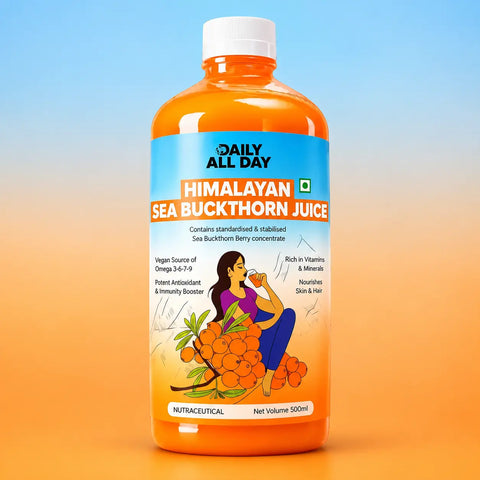
Quick Answer: Sea buckthorn is a potent sea buckthorn anti inflammatory ally. Its omega-7 fatty acids and flavonoids suppress key inflammatory markers, including nitric oxide and pro-inflammatory cytokines, at the cellular level. Daily All Day's Sea Buckthorn Juice - Glowing Skin & Omega 7 delivers these compounds in a bioavailable, cold-pressed form suitable for daily use.
Can Sea Buckthorn Reduce Inflammation Naturally?
Table of Contents
- Why Americans Are Paying Attention
- What Sea Buckthorn Actually Is
- The Compounds Behind the Anti-Inflammatory Effect
- What the Research Shows
- Which Form Works Best, and When to Take It
- What People Are Actually Asking
- Frequently Asked Questions
Why Americans Are Paying Attention
Most people discover sea buckthorn through a skin care rabbit hole. Then they read the research and realize the anti-inflammatory activity runs much deeper than a surface glow. The berry, the oil, the juice, they all work through overlapping mechanisms that touch the gut lining, the immune system, and cellular oxidative stress simultaneously. That's a rare combination in a single plant food.
What's missing from most articles on this topic, including several academic summaries currently ranking on Google, is specificity about three things readers consistently want to know: which compounds actually drive the sea buckthorn anti inflammatory effect, how juice bioavailability compares to capsules or oil, and who should not take it. We'll address all three directly.
What Sea Buckthorn Actually Is
Sea buckthorn (Hippophae rhamnoides) grows at high altitude in cold, dry climates. Himalayan sea buckthorn, harvested from Ladakh and Tibetan plateau regions, is considered particularly potent because the berries accumulate more carotenoids and omega fatty acids under intense UV exposure. In India it's called Leh Berry. In Russia, oblepikha. In traditional Ayurvedic use, the whole berry, pulp, seeds, and leaves were used for different purposes, which turns out to matter a lot for how you extract it.
Curious about its broader profile? See how sea buckthorn became a superdrink in the USA for more background. People on Quora have also weighed in on what sea buckthorn is and how it's used practically.
The Compounds Behind the Anti-Inflammatory Effect
The sea buckthorn anti inflammatory story isn't one compound doing heavy lifting. It's a network effect. Here's what matters most:
- Omega-7 (palmitoleic acid): The rarest of sea buckthorn's fatty acids, found in meaningful quantities in almost no other plant food. Omega-7 modulates inflammatory signaling in mucosal tissues, which is why gut and skin benefits tend to appear together.
- Omega-3 and Omega-6: Both are concentrated in the seed oil. They shift the arachidonic acid pathway, reducing the substrate available for pro-inflammatory eicosanoids.
- Flavonoids (isorhamnetin, quercetin, kaempferol): These block NF-kB activation, one of the master switches for inflammatory gene expression. A 2005 study of 30 subjects using sea buckthorn leaf extract found significant reduction in paw edema and inflammatory markers consistent with NF-kB inhibition.[3]
- Carotenoids (beta-carotene, zeaxanthin, lycopene): Potent free radical scavengers. They reduce oxidative stress that drives chronic low-grade inflammation.
- Vitamin C: Sea buckthorn contains significantly more vitamin C per gram than oranges. Vitamin C regenerates vitamin E in cell membranes, amplifying the antioxidant cascade.
- Polysaccharides from pulp and leaves: These support the gut barrier and modulate innate immune responses without overstimulating them.[2]
Juice vs. Oil vs. Capsules: Does Form Change Bioavailability?
This is a gap almost every article skips. The short answer: yes, form matters considerably.
Cold-pressed juice from the whole berry pulp preserves water-soluble vitamin C, polyphenols, and polysaccharides that are largely absent from seed oil capsules. Seed oil is the better delivery vehicle for omega fatty acids and fat-soluble carotenoids. A small clinical study published in 2024 found that flavonol bioavailability from sea buckthorn increased measurably when the berries were processed with a dairy medium, suggesting that fat-containing carriers improve absorption of the lipophilic compounds.[5]
Practical takeaway: if your primary goal is the sea buckthorn anti inflammatory effect on the gut lining and immune system, a juice made from whole berry pulp covers more of the relevant compound classes than a seed oil capsule alone. For joint or skin-specific omega loading, oil may be the stronger choice. Many people use both.
What the Research Shows
A 2025 review covering multiple clinical and preclinical studies found that sea buckthorn's effects on skin and mucosal barriers specifically involved modulation at multiple nodes of the inflammatory network, including cytokine suppression and barrier repair.[1] That's meaningful because most anti-inflammatory ingredients act at only one point in the cascade.
On gut inflammation specifically, a 2024 review examining sea buckthorn polyphenols across several studies showed increases in butyrate-producing bacteria and reductions in markers of intestinal permeability.[4] Butyrate is a short-chain fatty acid that directly feeds colonocytes and dampens mucosal inflammation. This is the mechanism behind sea buckthorn oil benefits for gut health, and it's one reason the berry is relevant to people dealing with bloating, irregularity, or general digestive discomfort.
For immune support, the antioxidant load (vitamins C and E combined with carotenoids) supports white blood cell function and reduces oxidative damage to immune cells.[7] Sea buckthorn immune support in the USA context matters most during winter months and high-stress periods when oxidative burden rises.
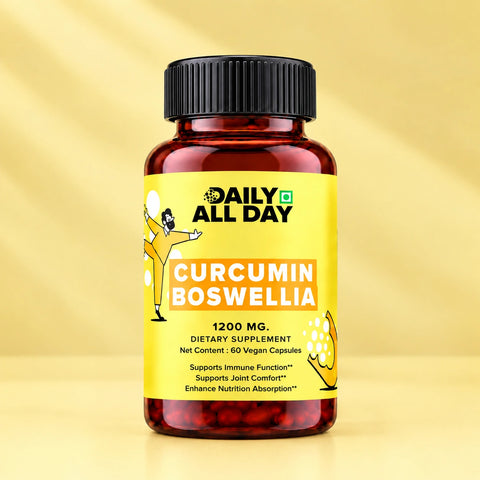
You can compare how sea buckthorn stacks up against other plant-based anti-inflammatories in our curcumin and boswellia joint pain guide. For a broader look at the evidence behind these ingredients, see our ingredients research and evidence FAQ.
Which Form Works Best, and When to Take It
Daily All Day's Sea Buckthorn Juice - Glowing Skin & Omega 7 is cold-pressed from Himalayan sea buckthorn pulp with no added sugars, artificial colors, or fillers. The pulp-based format preserves polyphenols and polysaccharides alongside the omega fatty acid profile.
Suggested use: 3 tablespoons mixed into water or a smoothie, twice daily. Do not take on an empty stomach. Fat-soluble carotenoids absorb better alongside a meal containing some dietary fat, so morning and evening meals are the practical anchor points.
People also exploring blood sugar and metabolic support alongside inflammation reduction may find Gluco Wise (berberine, Ceylon cinnamon, milk thistle) a complementary option, since chronic low-grade inflammation and insulin resistance often track together.
Who Should Be Cautious
Most adults tolerate sea buckthorn well at normal serving sizes. However, a few populations need to pause:
- Pregnant or breastfeeding women: Not recommended. Sea buckthorn's bioactive compounds have not been adequately studied in these groups, and some flavonoids may affect hormonal signaling.
- People on blood-thinning medications: Omega-7 and the high vitamin E content may have additive effects with anticoagulants. Check with a physician before starting.
- Those with known berry allergies: Rare but documented. Start with a small amount and monitor for any reaction.
- Anyone with a diagnosed condition: Sea buckthorn supports general wellness but is not a substitute for medical management of any specific condition.
This is a gap most top-ranking articles skip entirely. Knowing who shouldn't take something is as useful as knowing why others should.
30 / 60 / 90 Day Timeline
By day 30: Most people notice improved skin hydration and some reduction in post-meal bloating. Inflammatory changes in the gut lining are happening but are not yet visible.
By day 60: Skin texture tends to stabilize, and many users report fewer energy crashes around midday. Gut regularity often improves noticeably around this point.
By day 90: The cumulative antioxidant and omega-7 loading begins to show in skin resilience and reduced reactivity to environmental stressors. Immune-related markers, if tracked, typically reflect improved antioxidant status by this stage.
Results vary. Consistency matters more than dose. See how other users integrate it into a broader routine at Sea Buckthorn Juice: The Daily Functional Beverage.
What People Are Actually Asking
- What is sea buckthorn? Quora users describe it as a tart orange berry with a surprisingly broad wellness profile covering skin, gut, immunity, and metabolic health.
- What are its main uses? Common answers include topical skin care, digestive support, and immune system maintenance, with the juice and oil used for different purposes.
- Is sea buckthorn actually good for the body? The consensus is yes for most healthy adults, with caveats around pregnancy and anticoagulant medications.
- How exactly is it used day-to-day? Practical answers range from diluted juice in morning water to oil applied directly to dry skin patches.
Frequently Asked Questions
What makes sea buckthorn anti inflammatory compared to other plant oils?
Sea buckthorn contains omega-7 (palmitoleic acid), a fatty acid almost absent from other plant sources, alongside flavonoids like isorhamnetin and quercetin that directly block NF-kB, a central regulator of inflammatory gene expression. Most plant oils offer omega-3 or omega-6 but lack the rare omega-7 and the flavonoid density that sea buckthorn provides simultaneously. This multi-target activity is what distinguishes it from single-mechanism options like fish oil or evening primrose oil.
Is sea buckthorn juice or oil better for reducing inflammation?
They target overlapping but distinct aspects of inflammation. Cold-pressed juice from whole berry pulp delivers water-soluble vitamin C, polyphenols, and polysaccharides that support gut mucosal inflammation and immune function. Seed oil is richer in omega fatty acids and fat-soluble carotenoids relevant to joint and skin inflammation. For most people interested in broad sea buckthorn anti inflammatory support, juice is the more complete option; oil can be added for targeted fatty acid loading.
How long does it take for sea buckthorn to reduce inflammation noticeably?
Visible changes like improved skin hydration and reduced bloating often appear within 30 days of consistent daily use. Deeper inflammatory markers, including gut permeability and oxidative stress indicators, typically shift over a 60 to 90 day window. Studies examining sea buckthorn polyphenols generally used assessment windows of 8 to 12 weeks, which aligns with this timeline.
Can sea buckthorn interact with medications?
Yes, and this matters practically. The high vitamin E content and omega-7 fatty acids may amplify the effects of blood-thinning medications like warfarin. People on anticoagulants, cholesterol-lowering drugs, or immunosuppressants should consult a physician before adding sea buckthorn juice or oil. For otherwise healthy adults not on these medications, tolerance is generally good at normal serving sizes.
Is himalayan sea buckthorn more potent than other varieties?
Himalayan sea buckthorn omega 7 content and carotenoid concentration are typically higher than varieties grown at lower altitudes, largely because the plants accumulate more protective compounds under intense UV radiation and temperature stress at elevation. Whether this translates to a meaningfully different clinical outcome hasn't been tested head-to-head in human trials, but the phytochemical profile of high-altitude berries is measurably richer in published analyses.
Who should avoid sea buckthorn supplements?
Pregnant and breastfeeding women should avoid sea buckthorn because the flavonoids and bioactive fatty acids have not been studied in these populations and some compounds may affect hormonal activity. People with known berry allergies, those on anticoagulant therapy, and anyone managing a diagnosed medical condition should check with a healthcare provider first. Sea buckthorn immune support is appropriate for most healthy adults but is not a substitute for medical care.
For more on how gut-supportive plants compare, see how Triphala supports digestion.
Explore the Sea Buckthorn Juice - Glowing Skin & Omega 7 formula