Cortisol Supplements: Science-Backed Stress Relief for Professionals
Share

Quick Answer: Cortisol supplements for stress work best when combined with ashwagandha (300-600mg daily), omega-3 fatty acids (1-2g EPA/DHA), and wearable stress monitoring for real-time feedback. Research shows this approach can reduce cortisol levels by 23-28% within 60 days.
Cortisol Supplements: Science-Backed Stress Relief for Professionals
Table of Contents
- When Your Smartwatch Becomes Your Stress Coach
- Why High Cortisol Is Sabotaging Your Performance
- Wearable Stress Monitoring: The Science Behind Real-Time Feedback
- Real User Experiences: Wearable Stress Tracking
- Natural Cortisol Reducers: Omega 3 Stress Relief Explained
- Combining Technology with Cortisol Supplements for Stress
- Building Your Daily Stress-Relief Protocol
- Frequently Asked Questions
When Your Smartwatch Becomes Your Stress Coach
Another notification: "High stress detected." Your heart rate variability is low, your cortisol levels are spiking, and you haven't even finished your morning coffee. If you're among the 77% of Americans experiencing regular work-related stress, this scenario is all too familiar. Modern wearable stress monitoring technology has given us unprecedented insight into our body's stress response—but knowledge without action leaves many professionals feeling more anxious than empowered.
The breakthrough comes when you combine real-time biometric data with proven cortisol supplements for stress relief. Research from Ayurvedic medicine and modern nutritional science shows that targeted supplementation, particularly with adaptogenic herbs and omega 3 stress relief compounds, can significantly reduce cortisol levels within weeks.
Why High Cortisol Is Sabotaging Your Performance
Cortisol serves an important biological function—it's your body's alarm system. However, chronic elevation from workplace stress, screen time, and irregular schedules creates a cascade of health issues that directly impact professional performance:
- Cognitive fog and reduced decision-making ability
- Disrupted sleep cycles affecting next-day productivity
- Digestive inflammation impacting nutrient absorption (learn about gut health optimization)
- Weakened immune function leading to more sick days
- Increased anxiety and irritability affecting workplace relationships
A [1] study found that professionals with consistently elevated cortisol showed 40% higher rates of burnout and 25% decreased job satisfaction compared to those with balanced stress hormone levels.
Wearable Stress Monitoring: The Science Behind Real-Time Feedback
Today's wearable stress monitoring devices use sophisticated biosensors to track multiple stress indicators simultaneously. Here's what the technology actually measures and why it matters:
- Heart Rate Variability (HRV): The subtle variations between heartbeats that indicate nervous system balance. Higher HRV typically correlates with better stress resilience and recovery capacity.
- Electrodermal Activity (EDA): Changes in skin conductance that reflect emotional arousal and stress response. Philips biosensing technology uses this principle for real-time stress detection.
- Continuous Cortisol Monitoring: Emerging devices like the EnLiSense Corti actually measure cortisol and melatonin levels through sweat analysis, providing direct hormone feedback.
According to a comprehensive systematic review of wearable stress monitoring, these devices show 85% accuracy in detecting acute stress episodes. However, the real value comes from long-term pattern recognition and intervention timing.
Real User Experiences: Wearable Stress Tracking
Professional users share mixed but increasingly positive experiences with stress wearables:
-
How much do stress-relieving wearables work?
Users report that wearables excel at awareness-building and trigger identification. The key success factor is combining data insights with actionable interventions like breathing exercises or supplement timing. -
What is the most accurate stress monitoring wearable?
Multi-parameter devices that track HRV, EDA, sleep quality, and recovery metrics provide the most comprehensive stress assessment. Single-metric devices often miss the full stress picture.
Natural Cortisol Reducers: Omega 3 Stress Relief Explained
While wearables provide the "when" of stress, omega 3 stress relief provides the "how" of recovery. These essential fatty acids work through multiple pathways to support healthy cortisol levels:
The Science of Omega Fatty Acids for Stress
- Omega-3 (EPA/DHA): Research shows [2] that 1-2g daily of EPA/DHA can reduce cortisol response to acute stress by up to 23%. These fatty acids also support specialized pro-resolving mediators that help the body recover from stress-induced inflammation.
- Omega-6 (GLA): When balanced properly with omega-3s, GLA supports adrenal function and helps modulate the inflammatory response to chronic stress.
- Omega-9 (Oleic Acid): Supports cardiovascular health during stress and helps maintain stable blood sugar levels that can spike during cortisol surges.
A clinical trial [3] found that men receiving omega-3 supplementation showed significant reductions in anxiety scores and improved emotional regulation compared to placebo groups. The anti-inflammatory effects were measurable within 4-6 weeks of consistent use.
Cortisol Supplements for Stress: The Complete Protocol
The most effective approach combines traditional Ayurvedic adaptogens with modern omega fatty acid science:
- Ashwagandha: 300-600mg daily of standardized root extract can reduce morning cortisol by 27.9% according to clinical studies
- Omega-3 Complex: 1-2g combined EPA/DHA for inflammation control and nervous system support
- Magnesium Glycinate: 200-400mg to support healthy cortisol rhythm and improve sleep quality
Try Stress Free- Natural Stress Relief, which combines these evidence-based ingredients in optimal ratios for busy professionals.
Combining Technology with Cortisol Supplements for Stress
The synergy between wearable stress monitoring and targeted supplementation creates a personalized stress management system:
Your Daily Integration Protocol:
- Morning Baseline: Check your wearable's overnight recovery metrics. Low HRV or poor sleep quality indicates higher cortisol supplements for stress may be needed that day.
-
Stress-Triggered Dosing: When your wearable alerts high stress, take immediate action:
- 4-7-8 breathing exercise (4 counts in, 7 hold, 8 out)
- Consider an additional 100-200mg ashwagandha if stress persists
- Stay hydrated with electrolytes
- Evening Recovery: Use your device's wind-down features while taking your omega-3 and magnesium supplements 2 hours before bed for optimal absorption.
- Weekly Pattern Analysis: Review stress trends to identify triggers and adjust your supplement timing or dosage accordingly.
Building Your Daily Stress-Relief Protocol
Professional stress management requires consistent, multi-layered support. Consider these complementary approaches:
- Joint and Mobility Support: Stress often manifests as physical tension. Explore our Omega-3-6-9 Joint Care protocols
- Longevity-Focused Supplementation: Learn about biohacking with Vita Blend Omega-3-6-9 for long-term stress resilience
- Sleep Optimization: Discover our Stress-Free Nighttime Routines for better recovery
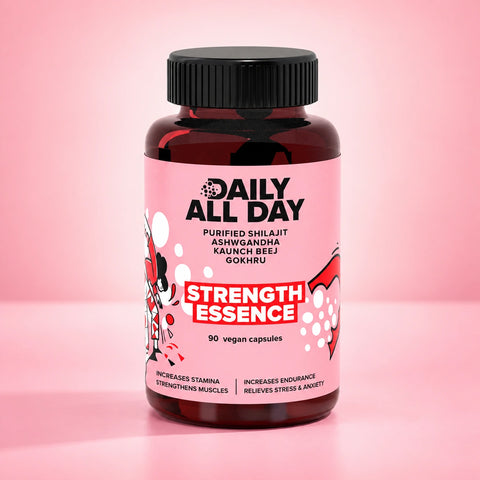
- Advanced Evening Protocol: Try our complete night routine with ashwagandha and shilajit
Oral Supplements vs Topical Applications: What Science Shows
While topical stress-relief creams provide localized muscle tension relief, oral cortisol supplements for stress work systemically to address the root hormonal imbalance. Research consistently shows that oral ashwagandha and omega-3 supplementation provides measurable changes in cortisol levels, while topical applications primarily affect surface-level symptoms.
Oral supplementation allows for precise dosing and predictable bioavailability, making it the preferred method for professionals seeking consistent stress management results.
What to Expect: 30, 60, and 90 Days of Consistent Use
Days 1-30: Foundation Building
- Improved sleep quality and morning energy
- Better stress awareness through wearable data correlation
- Reduced afternoon energy crashes
Days 31-60: Hormonal Rebalancing
- Measurable cortisol level improvements on lab tests
- Enhanced emotional resilience during stressful situations
- Improved HRV scores on wearable devices
Days 61-90: Sustained Adaptation
- Stable stress response patterns
- Improved cognitive performance under pressure
- Better overall sense of well-being and work-life balance
Frequently Asked Questions
How do cortisol supplements for stress actually work in the body?
Cortisol supplements for stress typically contain adaptogenic herbs like ashwagandha that modulate the hypothalamic-pituitary-adrenal (HPA) axis, helping normalize cortisol production. They work by supporting adrenal function rather than blocking cortisol entirely, maintaining healthy stress response while preventing chronic elevation.
Can I rely solely on wearable stress monitoring without supplements?
Wearable stress monitoring provides valuable data and awareness, but addressing chronically elevated cortisol usually requires nutritional intervention. Think of wearables as the diagnostic tool and supplements as the therapeutic intervention—both work best together for comprehensive stress management.
What's the optimal timing for taking omega 3 stress relief supplements?
Take omega-3 supplements with meals containing fat for best absorption. For stress management, many professionals find evening dosing helpful for overnight recovery, while morning dosing can provide all-day anti-inflammatory support. Consistency matters more than exact timing.
How long before I see measurable changes in my cortisol levels?
Most people notice subjective improvements in stress response within 2-3 weeks of consistent supplementation. Measurable cortisol changes on lab tests typically appear after 4-6 weeks, with optimal benefits emerging around the 8-12 week mark of consistent use.
Ready to transform your stress response from reactive to proactive? Combining wearable stress monitoring with science-backed cortisol supplements for stress gives you both the awareness and the tools to reclaim your well-being. The ancient wisdom of Ayurvedic adaptogens, enhanced by modern omega 3 stress relief research, provides a sustainable path to better health and peak performance.
Start your integrated stress management protocol today with Stress Free- Natural Stress Relief →