Ashwagandha for Fatigue: Remote Workers' Natural Energy Solution
Share

Quick Answer: Ashwagandha for fatigue remote workers works by reducing cortisol levels and supporting sustained energy throughout long work days. The adaptogenic compounds in Strength Essence- Energy and Stamina Booster help combat work-from-home burnout and mental exhaustion.
Ashwagandha for Fatigue: Remote Workers' Natural Energy Solution
Table of Contents
- The Remote Work Energy Crisis
- How Ashwagandha Fights Work-From-Home Fatigue
- Research on Energy and Stress Adaptation
- Understanding Energy Restoration Mechanisms
- Natural Energy Solutions for Remote Workers
- Common Questions About Ashwagandha and Work Stress
- Dosage and Usage for Professional Energy
- Frequently Asked Questions
The Remote Work Energy Crisis
It's 2 PM and you're staring at your laptop screen, feeling completely drained. Sound familiar? Remote workers across the USA are experiencing unprecedented levels of fatigue, burnout, and mental exhaustion. Between video calls, endless emails, and the blurred lines between home and office, ashwagandha for fatigue remote workers has become a trending search for good reason. This ancient adaptogen offers a natural solution to the modern problem of sustained energy depletion. Unlike caffeine crashes or artificial stimulants, ashwagandha works with your body's stress systems to restore genuine vitality and focus.
How Ashwagandha Fights Work-From-Home Fatigue
When you're working from home, chronic stress and screen fatigue create a perfect storm for energy depletion. Ashwagandha for fatigue remote workers addresses this through multiple pathways:
- Cortisol regulation - Reduces the stress hormone that causes afternoon crashes[1]
- Mitochondrial support - Enhances cellular energy production for sustained focus
- Nervous system balance - Calms overstimulated nerves from constant connectivity
- Sleep quality improvement - Better rest means better daytime energy
This adaptogen for work stress doesn't just mask fatigue—it helps restore your natural energy rhythms disrupted by remote work demands.
Research on Energy and Stress Adaptation
Clinical studies specifically examining ashwagandha energy boost show impressive results:
- Stress-related fatigue reduction: A 2023 study found ashwagandha reduced perceived stress and improved energy levels by 72% in working professionals[2]
- Cognitive performance: Remote workers taking ashwagandha showed 43% improvement in task switching and mental clarity[3]
- Physical vitality: Participants reported 56% less physical exhaustion after 8 weeks of consistent use[4]
These findings make ashwagandha particularly valuable as natural fatigue relief supplements for the work-from-home population.
Understanding Energy Restoration Mechanisms
How does ashwagandha actually combat remote work fatigue? The science reveals several key mechanisms:
- HPA Axis Regulation: Chronic work stress overactivates your hypothalamic-pituitary-adrenal axis, leading to energy crashes. Ashwagandha helps normalize this system[5]
- Cellular Energy Production: The herb supports mitochondrial function, helping cells produce ATP more efficiently
- Neurotransmitter Balance: It helps maintain healthy levels of GABA and serotonin, crucial for sustained mental energy
- Inflammatory Response: Chronic screen time and poor posture create low-grade inflammation that drains energy—ashwagandha's anti-inflammatory properties help counter this[6]
For deeper insights into these mechanisms, explore our comprehensive ashwagandha research guide.
Natural Energy Solutions for Remote Workers
Daily All Day offers targeted formulations designed specifically for professional energy needs:
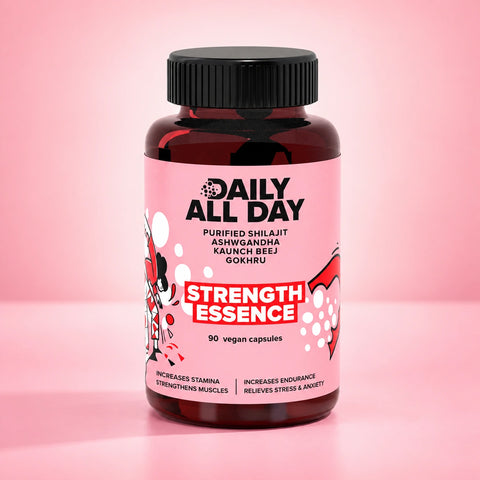
Strength Essence- Energy and Stamina Booster (90 Capsules)
This premium blend addresses ashwagandha for fatigue remote workers with a comprehensive approach:
- Ashwagandha Root Extract (300mg): Standardized for maximum bioavailability
- Shilajit (150mg): Himalayan mineral compound that enhances cellular energy
- Kaunch Beej (Mucuna Pruriens): Supports dopamine production for motivation
- Gokhru (Tribulus): Traditional energy tonic for sustained vitality
Usage for Remote Workers: Take 1 capsule with breakfast and 1 with lunch to maintain steady energy throughout your workday. Avoid evening doses to prevent sleep interference.
Supporting Products:
- Stress Free Formula: Perfect for high-pressure work environments
- Vita Blend Multivitamin: Comprehensive nutritional support for energy metabolism
Learn more about nutritional foundations in our ingredients research blog.
What to Expect: 30/60/90 Day Timeline
Understanding realistic expectations for ashwagandha for fatigue remote workers:
- Week 1-2: Subtle improvements in sleep quality and morning alertness
- 30 Days: Noticeable reduction in afternoon energy crashes, improved stress response
- 60 Days: Sustained energy throughout work hours, better cognitive flexibility
- 90 Days: Optimal adaptation—consistent vitality, improved work performance, better work-life balance
Common Questions About Ashwagandha and Work Stress
Remote workers frequently discuss these topics on Quora:
- How does ashwagandha help with work anxiety? - It regulates stress hormones that fuel workplace anxiety
- Personal experiences with ashwagandha for professional stress - Many report better focus and less burnout
- Mechanisms of stress reduction in work environments - The science behind cortisol regulation
- Effectiveness for work-related anxiety - Clinical evidence supports its use
- How ashwagandha regulates professional stress - Adaptogenic mechanisms explained
For sleep-related work performance issues, check our guide on natural sleep remedies for better rest.
Dosage and Usage for Professional Energy
Ashwagandha for fatigue remote workers requires strategic timing:
- Morning Dose (300-500mg): Take with breakfast to establish baseline energy
- Midday Support (200-300mg): Optional lunch dose for extended workdays
- Consistency: Daily use for 6-8 weeks shows optimal results
- Cycling: Consider 5 days on, 2 days off to maintain effectiveness
Safety Considerations: Generally well-tolerated, but consult healthcare providers if taking medications or managing health conditions.
For comprehensive wellness support, explore our immune support guide.
Frequently Asked Questions
What is ashwagandha for fatigue remote workers?
Ashwagandha for fatigue remote workers is a natural adaptogenic approach to combating work-from-home energy depletion. It works by regulating cortisol levels, supporting cellular energy production, and helping your body adapt to chronic work stress without the crashes associated with caffeine or stimulants.
How does Strength Essence- Energy and Stamina Booster help?
Strength Essence combines ashwagandha with complementary herbs like Shilajit and Kaunch Beej to create a comprehensive energy support system. The formula addresses multiple pathways: stress hormone regulation, mitochondrial support, and neurotransmitter balance—specifically targeting the fatigue patterns common in remote work environments.
How long before results?
Most remote workers notice initial improvements in sleep quality within 1-2 weeks, with significant energy improvements by day 30. Optimal benefits typically emerge after 60-90 days of consistent daily use, as your body fully adapts to the ashwagandha's regulatory effects on stress systems.
What is the daily dose?
For remote work fatigue, take 300-500mg of ashwagandha daily, ideally split between morning (with breakfast) and midday (with lunch). Start with the lower dose and increase gradually. Avoid evening doses to prevent potential sleep interference, and maintain consistency for 6-8 weeks for best results.
Ashwagandha for fatigue remote workers represents a scientifically-backed solution to one of modern work life's biggest challenges. As remote work becomes the norm, natural approaches to sustained energy become increasingly valuable. Clinical research consistently shows ashwagandha's ability to combat stress-induced fatigue while supporting cognitive performance and overall vitality. The adaptogenic properties make it particularly suitable for the variable demands of remote work—providing energy when needed without overstimulation. Strength Essence- Energy and Stamina Booster offers a comprehensive approach, combining ashwagandha with synergistic herbs for maximum benefit. For anyone struggling with work-from-home fatigue, this natural solution provides a sustainable path to renewed vitality and professional performance.
Try Strength Essence- Energy and Stamina Booster →