Can Ashwagandha Fix Remote Work Fatigue?
Share

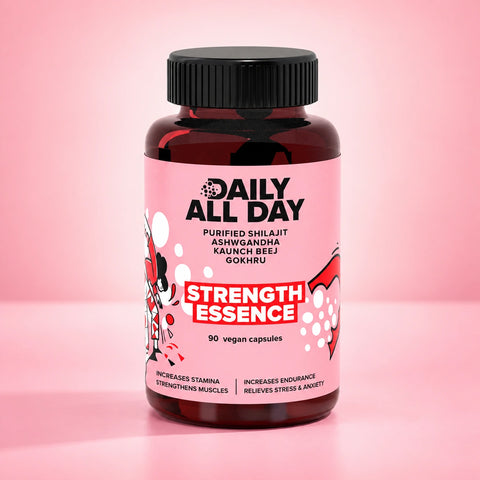
Quick Answer: Ashwagandha supports fatigue and energy by lowering cortisol through its active withanolides, which modulate the body's stress-response axis. Unlike caffeine, it builds stamina steadily over weeks. Strength Essence- Energy and Stamina Booster pairs ashwagandha with shilajit and kaunch beej for sustained, crash-free energy throughout the remote workday.
Can Ashwagandha Fix Remote Work Fatigue?
Table of Contents
- The Remote Work Fatigue Problem
- What Are Adaptogens, Really?
- Top Adaptogen Herbs for Energy
- Ingredients Deep Dive
- What the Studies Actually Show
- Real Questions, Straight Answers
- How and When to Take It
- Frequently Asked Questions
The Remote Work Fatigue Problem
It's 2:45 PM. Your third video call just ended, your inbox refilled itself, and you're reaching for coffee number four. Sound familiar? For millions of remote workers, this isn't a bad day. It's Tuesday.
The fatigue that builds up in remote work isn't ordinary tiredness. It's a combination of chronic low-grade stress, disrupted cortisol rhythms from irregular schedules, and the mental drain of context-switching all day at a desk. Caffeine masks it temporarily. Sleep helps, but only so much when the underlying stress physiology stays dysregulated.
That's where ashwagandha for fatigue and energy enters the conversation, not as a shortcut, but as a tool that works with your biology rather than overriding it. And the science behind it has gotten considerably more specific in recent years.
What Are Adaptogens, Really?
Adaptogens are botanicals that help the body maintain equilibrium under stress. The term sounds vague until you understand the mechanism: they modulate the hypothalamic-pituitary-adrenal (HPA) axis, the system that governs cortisol release. When that axis is chronically overstimulated (think: always-on Slack notifications, deadline pressure, social isolation), cortisol stays elevated longer than it should. That's what drains you.
Ashwagandha's active compounds, primarily withanolides, appear to act on this axis by supporting the body's ability to return cortisol to baseline after a stressor passes. For remote workers, this matters because it means less cumulative exhaustion over a workweek, not just a temporary mood lift. How adaptogens work exactly is a question researchers are still refining, but the HPA-axis model is the most evidence-supported explanation we have.
One thing worth noting: adaptogens are not stimulants. They don't spike energy. They support the conditions under which your own energy production works properly. That distinction matters when you're choosing between cortisol-focused supplements and a caffeinated energy drink.
Top Adaptogen Herbs for Energy
Not every adaptogen does the same thing. The full adaptogens list is long, but for remote work fatigue specifically, a few stand out:
- Ashwagandha (Withania somnifera): The most studied for cortisol reduction and fatigue. Dosages of 300 to 600 mg of root extract are the range most clinical trials have used.[1]
- Shilajit: A mineral-rich resin from the Himalayas, traditionally used for stamina. Supports mitochondrial function, which is how cells generate ATP (your actual energy currency).[6]
- Rhodiola Rosea: Better studied for acute mental fatigue and focus under deadline pressure than for chronic stress.[3]
- Kaunch Beej (Mucuna pruriens): Contains L-DOPA, a precursor to dopamine. Relevant for motivation and the "flat" feeling many remote workers describe after long stretches of low-stimulation desk work.
- Holy Basil (Tulsi): Supports emotional steadiness rather than physical energy, useful for the irritability that creeps in during high-pressure sprints.
Why do some adaptogen herbs make people feel noticeably better? Mostly because they're addressing a real physiological deficit, not adding a stimulant on top of an already-strained system.
Ingredients Deep Dive
Strength Essence- Energy and Stamina Booster combines ashwagandha (150 mg), shilajit (100 mg), kaunch beej (125 mg), and gokhru (125 mg) in one formula. Each ingredient has a distinct role:
- Ashwagandha (150 mg): Cortisol modulation and foundational fatigue support. The anchor of the formula.
- Shilajit (100 mg): Fulvic acid content supports nutrient absorption and mitochondrial energy pathways. This is where the "stamina" claim has the clearest biological grounding.
- Kaunch Beej (125 mg): Dopamine precursor support, addressing motivational fatigue specifically. Useful when the problem isn't sleepiness but a kind of mental flatness.
- Gokhru (125 mg): Traditional Ayurvedic herb used for vitality and endurance. Complements ashwagandha's stress-adaptive properties.
For those whose fatigue leans more toward stress and anxiety than physical tiredness, the Daily All Day Stress Free formula (ashwagandha 300 mg, chamomile, green tea extract, B6) may be the better starting point. Choosing between them depends on whether your primary symptom is low drive or high stress, and often it's both.
If you're also curious how cortisol supplements compare for remote workers more broadly, that breakdown covers the wider supplement landscape beyond ashwagandha alone.
What the Studies Actually Show
Here's where most articles on ashwagandha for fatigue and energy get vague. Let's be specific instead.
A 2019 randomized controlled trial of 60 adults under chronic stress found that 240 mg of ashwagandha root extract daily for 60 days reduced serum cortisol by roughly 23% compared to placebo, and participants reported significantly lower fatigue scores.[2]
A separate 2021 trial of 50 healthy adults looked at whether ashwagandha affected perceived stress versus measured fatigue. The results were nuanced: perceived stress scores didn't shift dramatically, but fatigue scores did. That distinction matters. Ashwagandha appears to reduce the physical and cognitive output of stress (the dragging feeling) more reliably than it changes how stressful a situation feels subjectively.[5]
A small clinical study of 29 adults using shilajit supplementation over 90 days noted improvements in mitochondrial function markers, supporting its role in physical stamina rather than mood.[4]
One gap almost no existing article covers: the timing of ashwagandha relative to meals and caffeine matters more than most guides acknowledge. Ashwagandha taken with food (particularly fat-containing food) shows meaningfully better absorption of withanolides. And taken alongside high-caffeine beverages, some users report the cortisol-lowering effect is partially blunted, because caffeine itself spikes cortisol. Morning dosing with breakfast and without coffee is the setup with the most physiological logic behind it.
A second gap worth addressing: who shouldn't take ashwagandha. Most articles say "pregnant women" and stop there. The fuller picture includes people on thyroid medications (ashwagandha has mild thyroid-stimulating properties and can interact with levothyroxine dosing), anyone with autoimmune conditions (it's immunomodulating, which cuts both ways), and people sensitive to nightshade plants, since ashwagandha is in the Solanaceae family. If you're on any daily prescription medication, a quick check with your pharmacist takes about two minutes and is worth it.
A third gap: bioavailability differences between capsule and powder form. Capsule extracts (typically standardized to 5% withanolides) deliver a consistent, concentrated dose. Raw ashwagandha powder has much higher variability in withanolide content, sometimes as low as 0.5%, meaning the dose on the label and the active dose your body receives can differ substantially. For therapeutic use rather than culinary use, standardized extract capsules are the more reliable format.
Do adaptogens have a proven role in modern diets? The evidence base is real, though it's still growing. The studies we have are mostly 60 to 90 days in duration with modest sample sizes. What they consistently show is a meaningful fatigue reduction signal, enough to justify trying a properly dosed formula for a full 90 days before drawing conclusions.
Do adaptogenic herbs really work? For fatigue and stress resilience specifically, the evidence is more solid than for most wellness supplements. The honest answer is: they work for most people who use them consistently, at clinically studied doses, for at least 60 days.
For context on how blood sugar regulation connects to afternoon energy crashes (a factor many remote workers overlook), the piece on berberine for blood sugar and energy is worth reading alongside this one.
Real Questions, Straight Answers
1. What adaptogen herbs make people feel noticeably better?
Ashwagandha and rhodiola come up most consistently in user reports and clinical trials for energy and mood. Shilajit tends to show up in feedback specifically around physical stamina and post-exercise recovery rather than mood.
2. How do adaptogens work exactly?
They modulate the HPA axis, the system governing cortisol release, and support mitochondrial energy pathways. The net effect is a more calibrated stress response and more efficient cellular energy production over time.
3. What role do adaptogens play in modern diets?
They're not a food replacement. They fill a specific gap: supporting the stress-response system that modern work patterns strain continuously. They're most useful as a daily supplement alongside a reasonably balanced diet, not as compensation for poor sleep or nutrition.
4. Do adaptogenic herbs actually work?
For fatigue and cortisol balance, the clinical evidence says yes, with consistent dosing over 60 to 90 days. They're not fast-acting like caffeine, but the effect builds and doesn't come with a crash or dependency.
How and When to Take It
Timing and consistency matter more than most people realize with ashwagandha for fatigue and energy.
Take it with food. A meal with some fat content improves withanolide absorption noticeably. Morning dosing works well for most people because it aligns with the natural cortisol peak (which happens in the first hour after waking) and supports a more gradual cortisol decline through the day rather than a mid-afternoon cliff.
Some people do better with an evening dose, particularly if their main complaint is that stress bleeds into sleep quality. Evening ashwagandha may support the wind-down process. If poor sleep is part of your fatigue picture, the guide on magnesium glycinate and sleep quality covers the sleep side of the equation well.
Pair supplementation with movement breaks (even 10-minute walks cut cortisol measurably), a protein-forward breakfast, and deliberate screen breaks. Ashwagandha works better when it's supporting a system that's getting some basic inputs right, not compensating for a completely depleted one.
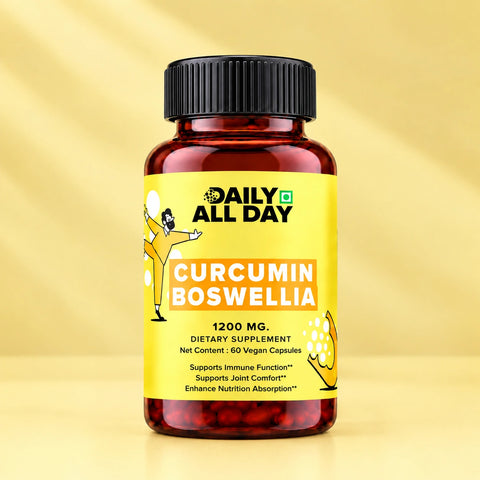
For remote workers dealing with the physical side of fatigue (tension from sitting, low-grade inflammation), combining adaptogens with anti-inflammatory support is worth considering. The breakdown on curcumin and boswellia for joint pain covers that angle.
And if your energy crashes are tied to stress eating or erratic blood sugar, see also: fatigue, sleep, and stress and metabolic resilience for recovery.
Finally: a note on functional drinks marketed for stress. Many contain adaptogens at sub-clinical doses. If you're evaluating those alongside capsule supplements, the comparison in cortisol-lowering drinks for remote workers is a useful reality check on what dose actually shows up in the research versus what's in most beverages.
30/60/90 Day Timeline: What to Realistically Expect
Adaptogens aren't felt on day one. Here's an honest map of what most people experience:
Day 1 to Day 30: Quiet Foundation
Most people notice small things first. Slightly less reliance on that fourth coffee. A bit more even-keeled during a stressful call. Sleep may feel marginally deeper. Don't expect dramatic shifts yet. The HPA axis takes time to recalibrate.
Day 31 to Day 60: Noticeable Shift
This is usually when people start noticing sustained energy mid-afternoon rather than a crash. Mental clarity during complex tasks tends to improve. Stress reactions (the spike of frustration during a bad meeting) often feel shorter and less intense. The ashwagandha cortisol balance effect becomes more apparent here.
Day 61 to Day 90: Compounded Benefits
At 90 days, most clinical trials show their strongest results. Energy consistency across the day. Less cumulative fatigue by Friday. Better recovery over the weekend. This is also when you can accurately evaluate whether the formula is working for you, because anything earlier is still the build-up phase.
Frequently Asked Questions
Does ashwagandha work differently for fatigue versus stress?
Yes, and this is an important distinction. Clinical trials suggest ashwagandha is more reliably effective at reducing the physical and cognitive output of stress (tiredness, brain fog, low stamina) than at changing the subjective feeling of being stressed. A 2021 trial of 50 adults found fatigue scores dropped significantly while perceived stress scores showed smaller changes. If your main complaint is feeling drained rather than anxious, ashwagandha's evidence profile is particularly relevant.
Can I take ashwagandha if I'm already drinking coffee every day?
You can, but timing matters. Caffeine spikes cortisol, and ashwagandha's mechanism involves supporting cortisol balance. Taking them simultaneously may partially blunt each other's effects. Most practitioners suggest separating ashwagandha from caffeine by at least 60 to 90 minutes, or taking it with a non-caffeinated meal. Morning dosing with breakfast before your first coffee is a reasonable approach for most people.
Who should be cautious about taking ashwagandha?
People on thyroid medications (ashwagandha has mild thyroid-stimulating properties that can affect levothyroxine dosing), those with autoimmune conditions (it's immunomodulating), and anyone sensitive to nightshade plants should check with a healthcare provider first. Pregnancy is the most commonly cited caution, and that applies throughout pregnancy, not just one trimester. The herb has uterine-stimulating properties in higher doses.
Is ashwagandha powder or capsule form more effective?
Standardized extract capsules are more reliable for therapeutic use. Raw powder withanolide content varies widely, sometimes between 0.5% and 5% depending on the source and processing. Capsules standardized to 5% withanolides deliver a consistent, predictable dose. For culinary use (in golden milk or smoothies) powder is fine. For fatigue and energy support, the extract form gives you confidence that you're hitting the dose ranges the studies actually used.
How does Strength Essence differ from a basic ashwagandha capsule?
Strength Essence- Energy and Stamina Booster adds shilajit for mitochondrial energy support and kaunch beej for dopamine precursor activity, which addresses motivational fatigue specifically. A basic ashwagandha capsule primarily works on the cortisol-stress axis. The combination targets both the stress-driven fatigue and the "flat, unmotivated" fatigue that remote workers often describe as separate but simultaneous problems.
What time of day works best for ashwagandha for fatigue and energy?
Morning dosing with a fat-containing meal is the most common recommendation for energy support, as it aligns with the natural cortisol peak and supports a more gradual decline through the day. Evening dosing suits people whose main issue is stress-disrupted sleep. Some people split the dose, taking half in the morning and half in the evening, particularly with a formula that includes stamina-focused ingredients like shilajit.