What Protein Bar Ingredients Harm Your Metabolism?
Share

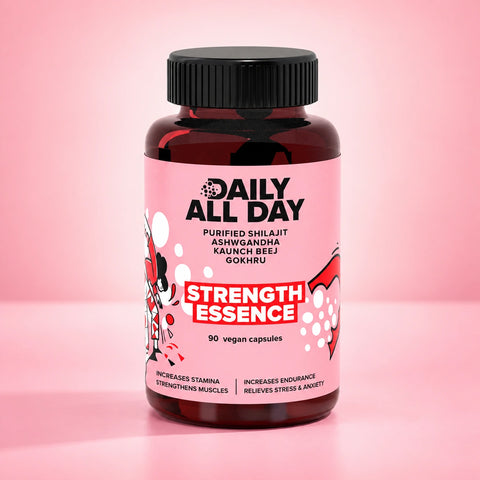
Quick Answer: Many protein bars contain sucralose, maltitol, and high-fructose corn syrup, which disrupt gut bacteria and blunt insulin sensitivity. If you want clean protein support without those additives, the Beast Mode Combo from Daily All Day skips synthetic fillers entirely, using Ayurvedic botanicals instead.
What Protein Bar Ingredients Harm Your Metabolism?
Table of Contents
- The Afternoon Crash Nobody Talks About
- What Protein Bars Actually Contain
- 7 Ingredients Worth Knowing
- Why Sweeteners Are the Bigger Problem
- What Happens Inside Your Metabolism
- Practical Label-Reading Guide
- Cleaner Alternatives That Actually Work
- Real Questions, Straight Answers
- Frequently Asked Questions
The Afternoon Crash Nobody Talks About
You eat a protein bar at 3 pm. It tastes fine. By 4:30, you feel worse than before you ate it. Foggy, a little bloated, hungry again. Most people blame stress or poor sleep. The bar rarely gets the credit it deserves.
This isn't a fringe experience. A 2020 randomized crossover trial of 120 adults published in Cell Host & Microbe found that artificial sweeteners, including sucralose and aspartame, significantly altered gut microbiome composition after just two weeks of daily exposure.[1] Gut changes that fast have downstream effects on energy regulation, and most protein bar consumers have no idea it's happening.
This is exactly the kind of information that doesn't show up on a label, and it's what we cover here, practically, without the fear-mongering.
What Protein Bars Actually Contain
Walk down any supplement aisle and you'll find bars marketed as clean, functional, or high-performance. The front panel talks about grams of protein. The back panel tells a different story.
Most commercial bars combine a protein base (whey concentrate, soy isolate, or pea protein) with some combination of sweeteners, binding agents, flavoring systems, emulsifiers, and preservatives. Each category has trade-offs. Some are benign. Others interact with metabolism in ways that most shoppers don't anticipate.
According to Healthline's analysis of protein bars, many popular options contain more added sugar than a standard candy bar, often distributed across four or five separate sweetener sources so none appears high on the ingredient list. That's a labeling tactic, not a nutrition strategy. Knowing how to read nutrition labels properly is the first real defense.
7 Ingredients Worth Knowing
1. Sucralose and Aspartame
Both are zero-calorie synthetic sweeteners used to hit macros without adding sugar. The problem is the gut response. A 2021 clinical study of 137 healthy adults showed that sucralose consumption altered insulin secretion patterns during glucose tolerance tests, even without direct caloric contribution.[2] That's a measurable metabolic signal from something that technically has no calories.
2. Maltitol
This sugar alcohol is common in "sugar-free" bars. It has a glycemic index of roughly 35, which sounds low until you compare it to xylitol's 7 or erythritol's near-zero. Maltitol can raise blood glucose meaningfully, especially at bar-sized doses, and it ferments in the colon, causing gas and bloating in a significant portion of users. Integrative medicine practitioners note that sugar alcohol labels are frequently misread as harmless.
3. High-Fructose Corn Syrup
Still present in some budget-tier bars. Fructose is metabolized almost entirely in the liver, bypassing the glucose-sensing systems that normally trigger satiety. Regular intake contributes to hepatic fat accumulation and blunted leptin response over time.
4. Soy Protein Isolate
The isolation process strips away fiber and isoflavones, leaving a protein that absorbs quickly but lacks the buffering compounds found in whole soy. Some individuals also experience thyroid-related sensitivity, particularly at the quantities found in two-bar-per-day habits.
5. Hydrogenated and Fractionated Palm Oils
Used as texture agents. Even partially hydrogenated oils carry residual trans-fat content that promotes low-grade inflammation, which directly impairs insulin receptor sensitivity at the cellular level.
6. Carrageenan
A seaweed-derived emulsifier that sounds natural. Small clinical studies suggest it can trigger inflammatory signaling in intestinal cells. It's less studied than the sweeteners above, but worth flagging, especially for anyone already managing digestive sensitivity.
7. Synthetic Preservatives (BHA, BHT, TBHQ)
These extend shelf life to 12-18 months. They also act as endocrine disruptors at higher exposures. Daily bar consumption can accumulate meaningful cumulative exposure over weeks.
For a full look at how these compounds interact with Ayurvedic ingredient principles, see our ingredients deep-dive research.
Why Sweeteners Are the Bigger Problem
Most conversations about protein bars focus on sugar content. The more relevant issue, at least for metabolic health, is what artificial sweeteners do to the gut-brain axis.
Your gut bacteria influence glucose metabolism through short-chain fatty acid production and through direct signaling to pancreatic beta cells. When sweetener exposure shifts microbial populations, particularly reducing Bacteroidetes strains, those signals get noisier. The result isn't dramatic day-to-day, but over months it compounds.
Nutrition specialists also highlight that sweet taste without caloric payload can paradoxically increase cravings for sweet foods later in the day, a neurological loop that undermines appetite regulation.
None of this means a single bar ruins your metabolism. Context matters. But if protein bars are a daily habit and your energy or digestion feels off, the sweetener load is a reasonable first variable to examine. For deeper context on the gut-metabolism connection, our post on why gut health matters for immunity and energy covers the broader picture.
What Happens Inside Your Metabolism
Three mechanisms connect the ingredients above to metabolic disruption. Understanding them makes label-reading more intuitive.
Insulin signaling noise. Artificial sweeteners activate sweet taste receptors in the gut, prompting a partial insulin response without delivering glucose. Over time, this can desensitize receptor pathways and contribute to what researchers describe as "cephalic phase insulin resistance." It's not the same as type 2 insulin resistance, but it moves in the same direction.
Microbiome composition shifts. The 2020 trial of 120 adults cited above found measurable microbiome changes within 14 days of artificial sweetener exposure. Reduced microbial diversity correlates with lower production of butyrate, a short-chain fatty acid that supports both gut lining integrity and metabolic efficiency. Our post on daily fiber intake explains why fiber quantity and source also shape this dynamic.
Inflammatory baseline. Trans fats, synthetic preservatives, and carrageenan each contribute to elevated NF-kB activity, a transcription factor that coordinates inflammatory responses. Chronically elevated inflammation, even at subclinical levels, impairs mitochondrial efficiency and fat oxidation. This is the pathway most closely linked to stubborn energy crashes. For science-backed options that work against this pattern, our natural metabolism boosters guide is worth reading alongside this one.
Practical Label-Reading Guide
You don't need to avoid all bars forever. You need a faster way to screen them at the shelf.
The 5-ingredient rule. Bars with five or fewer recognizable ingredients almost never contain the problem additives above. Dates, nuts, pea protein, cocoa, sea salt. That's a bar.
Check the sweetener line first. If you see sucralose, aspartame, acesulfame potassium, or maltitol before the fifth ingredient, put it back. These are concentration signals.
Watch for oil quality. "Fractionated" or "partially hydrogenated" in the fat section is a red flag. "Palm kernel oil" without further qualification is worth scrutiny too.
Protein source matters. Whole food proteins (almonds, sunflower seeds, brown rice protein) behave differently in digestion than highly processed isolates. Texture is often a clue: chalky or overly smooth bars usually rely on isolates with heavy emulsification.
Also worth knowing: fiber content affects how quickly any carbohydrate raises blood glucose. A bar with 15g of carbs and 6g of fiber performs very differently from one with 15g of carbs and 1g of fiber. Natural ingredients like sea buckthorn offer fiber alongside antioxidants, a combination most bars don't come close to replicating.
Cleaner Alternatives That Actually Work
If the goal is sustained energy and metabolic support without the additive load, a targeted supplement approach often outperforms convenience bars. Here's what we'd actually suggest.
Beast Mode Combo
The Beast Mode Combo is formulated without synthetic sweeteners, artificial binders, or preservatives. It draws on Ayurvedic botanical compounds that support energy metabolism and muscle recovery through verified pathways rather than caloric shortcuts. For anyone replacing a daily bar habit, this is the most direct swap in the Daily All Day lineup.
Blood Sugar Support
If your bar habit was partly about managing afternoon energy dips, Gluco Wise Blood Sugar Support addresses the root variable directly. Its Ayurvedic herb blend supports stable glucose signaling without the sweetener interference described above.
Foundational Nutrition
Two products fill gaps that most bars never address properly:
- Total Wellness Omega 3-6-9 supports the anti-inflammatory environment that metabolic efficiency depends on.
- Ayurvedic Multivitamin with B12 and B Complex covers micronutrient gaps without the artificial fillers common in mass-market multis.
30/60/90 Day Timeline
Days 1-30: Remove bars containing artificial sweeteners and sugar alcohols from your daily routine. Substitute whole food snacks and introduce the Beast Mode Combo if protein support is the goal. Most people notice reduced afternoon bloating and more consistent energy within the first two weeks.
Days 31-60: Add Gluco Wise if blood sugar stability remains a concern. With the sweetener-driven insulin signaling noise reduced, the Ayurvedic herbs in Gluco Wise have a cleaner environment to work in. Users commonly report fewer energy crashes and more stable appetite through this phase.
Days 61-90: By this point, the gut microbiome has had time to begin rebalancing. Fiber intake from whole foods, combined with consistent omega fatty acid support, should produce measurable differences in sustained energy and digestion. This is when most people decide they don't miss the bars at all.
Real Questions, Straight Answers
- Are protein bars actually healthy? Integrative medicine practitioners note that the answer depends almost entirely on the ingredient list. A bar made from dates, nuts, and pea protein is nutritionally reasonable. A bar with six sweeteners and hydrogenated oil isn't, regardless of the protein count on the front.
- Do artificial sweeteners actually cause weight gain? Nutrition specialists explain that the mechanism isn't direct caloric contribution but rather increased cravings and microbiome disruption, both of which can contribute to weight management difficulty over time.
- How do I get enough protein without bars? Greek yogurt, eggs, cottage cheese, legumes, and quality whole-food supplements like the Beast Mode Combo all deliver protein without the additive load. Variety across sources also provides a broader amino acid profile.
- What's the fastest way to tell if a bar is problematic? Flip it over and read ingredients 3 through 8. That's where the sweeteners and oils hide. The first two are almost always the protein source and a nut or grain. Numbers 3-8 tell you everything.
Frequently Asked Questions
Which protein bar sweeteners are hardest on gut bacteria?
Sucralose and aspartame have the most clinical evidence connecting them to microbiome disruption. A 2020 randomized crossover trial of 120 adults found both altered gut bacterial composition within 14 days of daily exposure, with sucralose showing the most pronounced shift in Bacteroidetes populations. Maltitol causes less microbiome disruption but more direct digestive symptoms due to colonic fermentation.
Is soy protein isolate in protein bars actually harmful?
For most people, occasional soy protein isolate is not harmful. The concern arises with daily high-dose consumption, particularly in people with thyroid sensitivity, where isoflavone residues in the isolate may interfere with iodine uptake. Whole food soy sources like edamame carry fewer of these concerns because the fiber and phytonutrients buffer the isoflavone concentration.
Can I use the Beast Mode Combo as a direct replacement for protein bars?
The Beast Mode Combo is formulated to support protein metabolism and energy without synthetic sweeteners or preservatives, making it a strong functional alternative for people using bars primarily for post-workout or afternoon energy. It doesn't replicate the chewable convenience of a bar, but it delivers cleaner nutritional support without the additive trade-offs covered in this post.
How does the all day wellness store approach differ from mainstream supplement brands?
The all day wellness store philosophy at Daily All Day centers on Ayurvedic formulation principles, which prioritize whole botanical compounds over isolated synthetics. That means no artificial sweeteners, no synthetic preservatives, and no fillers that compromise the ingredient quality. Most mainstream supplement brands optimize for cost and shelf life; the all day wellness store approach optimizes for ingredient integrity.
How long does it take gut bacteria to recover after stopping artificial sweeteners?
Small clinical studies suggest initial microbiome rebalancing begins within two to four weeks of removing artificial sweeteners, though full diversity restoration can take two to three months depending on diet quality during that period. Increasing fiber from whole food sources speeds the process by feeding beneficial bacterial strains that were suppressed during sweetener exposure.
Does timing of protein intake matter when switching away from bars?
Yes, and this is a detail most protein bar comparisons skip entirely. Protein consumed within 30-60 minutes post-exercise supports muscle protein synthesis more effectively than the same protein eaten outside that window, regardless of source. If you used bars primarily as post-workout nutrition, replacing them with a clean supplement taken at the same timing window preserves that benefit without the additive load.
The protein bar industry has done an impressive job making processed convenience food look like a wellness choice. Reading ingredient lists carefully, understanding what sucralose actually does to gut bacteria, and knowing that maltitol isn't the neutral sweetener its marketing implies, these are the practical edges that most supplement content skips. At Daily All Day, the all day wellness store standard means those trade-offs don't make it into the formula at all.[1][2]
See the full Beast Mode Combo formula